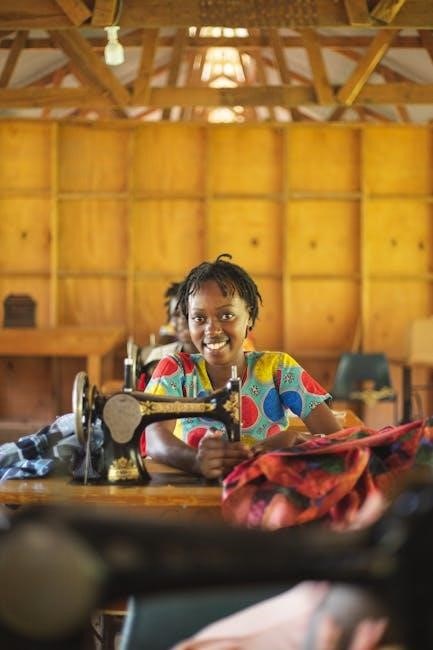
Beginner Sewing Class Curriculum PDF: A Comprehensive Plan
This detailed PDF outlines a 15-lesson beginner sewing course, spanning 50 minutes each, ideal for adults seeking foundational skills and individual guidance.
will foster a collaborative learning environment, allowing participants to share their aspirations and experience levels – from complete beginners to those with minimal exposure. We’ll clearly define course objectives, emphasizing the acquisition of fundamental skills like machine operation, fabric understanding, and basic project construction.
Expectations will be outlined regarding attendance, participation, and practice. Crucially, we’ll establish comprehensive sewing safety rules, covering machine handling, tool usage, and workspace organization to ensure a secure and enjoyable learning experience for everyone involved. This foundational lesson is key to building confidence and setting a positive tone for the course.
A warm welcome to all aspiring sewists! This segment begins with a friendly introduction of the instructor, outlining their sewing background and teaching philosophy. Students will then have the opportunity to introduce themselves, sharing their names, prior sewing experience (if any), and what they hope to achieve in this course.
This interactive session aims to create a comfortable and supportive learning atmosphere. We’ll briefly discuss the prevalence of sewing as a valuable life skill and a creative outlet. Encouraging open communication from the start is vital, fostering a sense of community and allowing the instructor to tailor the course to the group’s collective needs and interests.
B. Course Objectives & Expectations
This course aims to equip students with fundamental sewing skills, enabling them to confidently tackle simple projects and continue their sewing journey independently. Objectives include mastering basic machine operation, understanding fabric properties, and executing essential hand-sewing techniques.
Expectations involve active participation, consistent practice, and a willingness to learn from mistakes. Students are encouraged to ask questions and collaborate with peers. The course is designed for beginners, potentially requiring repetition for full comprehension. Completion of assigned projects is expected, fostering skill development. A commitment to safety protocols is paramount throughout the entire learning process.
C. Sewing Safety Rules
Prioritizing safety is crucial in the sewing environment. Always maintain focus while operating the sewing machine, keeping fingers clear of the needle. Never force the fabric; let the machine do the work. Regularly inspect equipment for damage and report any issues immediately.
Proper use of scissors and rotary cutters is essential – always cut away from the body. Be mindful of electrical cords to prevent tripping hazards; Keep the workspace clean and organized. Understand emergency stop procedures for the sewing machine. Following these rules ensures a secure and enjoyable learning experience for everyone involved in the class.
II. Sewing Machine Basics (Lessons 2-3)
These lessons form the core of machine proficiency. Students will learn to identify all parts of a sewing machine, understanding their function for optimal operation. Mastering winding a bobbin is fundamental, followed by precise threading the machine – a common initial challenge.
Extensive basic stitch practice (straight stitch) builds muscle memory and control. We’ll address troubleshooting common sewing machine issues like thread bunching and skipped stitches, fostering independent problem-solving skills. Emphasis will be placed on proper machine maintenance for longevity and consistent performance.
A. Parts of a Sewing Machine
This lesson provides a comprehensive overview of sewing machine anatomy. We’ll dissect the machine, identifying key components like the power switch, handwheel, presser foot, needle clamp, bobbin winder, tension dials, and stitch length/width selectors.
Students will learn the function of each part, understanding how they interact to create a stitch. Visual aids and hands-on exploration will reinforce learning. We’ll discuss the importance of regular cleaning and oiling to maintain optimal performance. A detailed diagram will be provided for future reference, ensuring students confidently recognize and utilize each element.
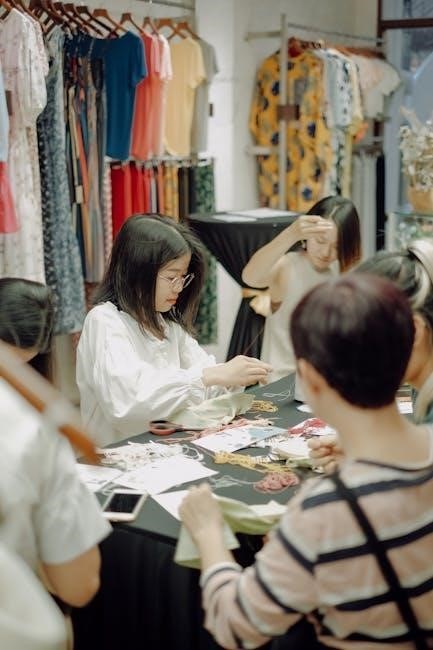
B. Winding a Bobbin
Mastering bobbin winding is crucial for successful sewing. This lesson demonstrates the correct technique, starting with thread placement on the spool pin and guiding it through the tension disc. Students will learn to properly position the bobbin on the winder spindle and engage the winding mechanism.
We’ll emphasize achieving even winding, avoiding overfilling or loose thread. Troubleshooting common issues like uneven winding or thread breakage will be addressed. Practice sessions will ensure proficiency, as a correctly wound bobbin is essential for balanced stitches and a smooth sewing experience. Diagrams and step-by-step instructions will be provided.
C. Threading the Machine
Correct threading is paramount for proper stitch formation. This lesson provides a detailed, step-by-step guide to threading the upper and lower threads of the sewing machine. Students will learn to follow the machine’s threading path precisely, ensuring the thread engages all necessary tension points.
We’ll cover threading the needle correctly and understanding the function of each guide. Common threading mistakes, such as missed guides or incorrect tension, will be identified and corrected. Practice will be emphasized, as consistent, accurate threading prevents skipped stitches and ensures optimal machine performance. Visual aids and clear instructions will be utilized.
D. Basic Stitch Practice (Straight Stitch)
Mastering the straight stitch is foundational to all sewing projects. This lesson focuses on practicing consistent, even straight stitches on various fabric types. Students will learn to control machine speed and maintain a consistent seam allowance. We’ll explore stitch length adjustments and their impact on fabric appearance and strength.
Exercises will include stitching straight lines, curves, and corners. Emphasis will be placed on maintaining even tension and preventing puckering. Students will troubleshoot common issues like uneven stitches or thread breakage. This hands-on practice builds muscle memory and confidence, preparing them for more complex sewing tasks.
E. Troubleshooting Common Sewing Machine Issues
Even with practice, sewing machines can encounter problems. This lesson equips students with the skills to diagnose and resolve frequent issues independently. We’ll cover common culprits like thread bunching, skipped stitches, and needle breakage, explaining the causes and solutions for each.
Students will learn how to re-thread the machine correctly, check the bobbin, and adjust tension settings. We’ll also discuss proper needle selection for different fabrics. Practical demonstrations and hands-on practice will build confidence in machine maintenance. The goal is to empower beginners to overcome obstacles and continue their sewing journey smoothly.
III; Fabric Fundamentals (Lesson 4)
Understanding fabric is crucial for successful sewing projects. This lesson introduces students to the two primary fabric categories: woven and knit, detailing their distinct characteristics and appropriate uses. We’ll explore how the weave or knit impacts drape, stretch, and stability.
A key focus will be understanding grainlines – lengthwise, crosswise, and bias – and their influence on garment fit and appearance. Students will learn the importance of pre-washing fabrics to prevent shrinkage and color bleeding. Hands-on exercises will involve identifying fabric types and grainlines, solidifying their understanding for future projects.
A. Types of Fabrics (Woven vs. Knit)
This section differentiates between woven and knit fabrics, foundational knowledge for any beginner sewer. Woven fabrics, like cotton and linen, are created by interlacing two sets of yarns at right angles, resulting in little stretch. They’re ideal for structured garments and home décor.
Knit fabrics, such as jersey and fleece, are made by interlocking loops of yarn, offering significant stretch and comfort. We’ll discuss how these differing structures affect sewing techniques and project suitability. Students will examine samples, identifying weave types and assessing their properties, learning to choose the right fabric for their creations.
B. Understanding Grainlines
This lesson focuses on the crucial concept of fabric grainlines: lengthwise, crosswise, and bias. The lengthwise grain runs parallel to the selvage edge, offering the least amount of stretch and providing stability to garments. The crosswise grain, perpendicular to the selvage, has more give.
The bias, at a 45-degree angle, exhibits the most stretch and is often used for fitted designs or decorative elements. Students will learn to identify grainlines on fabric, understanding how they impact drape, shape, and the overall success of a sewing project. Accurate grainline alignment is essential for professional-looking results.
C. Fabric Preparation (Pre-washing)
This lesson emphasizes the importance of pre-washing fabrics before cutting and sewing. Many fabrics shrink when washed, and pre-washing prevents garment distortion after completion. Different fabrics require different washing methods – cottons can typically withstand warm water, while delicate fabrics like rayon or silk need gentle cycles or hand washing.
Students will learn to identify fabric content and choose appropriate washing techniques. Pre-washing also removes excess dyes or finishes that could affect the final project. It’s a vital step ensuring a well-fitting, durable, and professionally finished sewn item.
IV. Hand Sewing Techniques (Lesson 5)
This lesson introduces essential hand sewing skills, providing a foundation for repairs and detail work. Students will master the running stitch – a quick, basic stitch for gathering or temporary basting – and the back stitch, known for its strength and resemblance to machine stitching.
We’ll also cover practical seam finishes like the zigzag stitch (for preventing fraying) and pinked edges (using pinking shears). These techniques enhance garment durability and appearance. Emphasis will be placed on proper needle threading, knot tying, and stitch consistency, building confidence and precision in hand sewing.
A. Essential Hand Stitches (Running Stitch, Back Stitch)
This segment focuses on mastering two fundamental hand stitches: the running stitch and the back stitch. The running stitch, a simple in-and-out technique, is perfect for quick seams, gathering fabric, or creating temporary basting stitches. Students will practice achieving even stitch length and consistent tension.
Next, we’ll delve into the back stitch, a stronger, more durable stitch resembling machine sewing. Detailed instruction will cover creating secure backstitches, ideal for repairs or when a machine isn’t available. Emphasis will be placed on proper needle control and achieving a neat, professional finish with both stitches.
B. Seam Finishes (Zigzag, Pinked Edges)
This lesson introduces essential seam finishes to prevent fabric fraying and create a professional look. We’ll begin with the zigzag stitch, demonstrating its versatility in securing raw edges, particularly on knit fabrics. Students will practice varying zigzag width and length for different fabric weights and desired finishes.
Next, we’ll explore pinked edges, achieved using pinking shears. This quick method creates a scalloped edge, slowing down fraying. We’ll discuss when pinking shears are appropriate and their limitations compared to more secure finishes. Emphasis will be placed on maintaining a consistent angle and avoiding distortion of the fabric during the process.
V. Simple Sewing Projects (Lessons 6-10)
These hands-on projects solidify learned skills through practical application. We start with a pillowcase, mastering straight seams and basic hemming techniques – a perfect introduction to garment construction. Next, a drawstring bag reinforces construction skills, focusing on accurate measuring and consistent stitching.
A simple skirt project introduces waistband application, building confidence with more complex steps. Following this, a table runner project emphasizes accurate cutting and piecing, crucial for quilting and patchwork. Finally, a napkin project focuses on neat corner finishing, a detail that elevates any sewn item. Each project builds upon the previous one, fostering skill progression.
A. Pillowcase Project ⎯ Straight Seams & Hemming
The pillowcase project is the cornerstone of straight seam mastery. Students will practice cutting fabric accurately, ensuring consistent seam allowances for a professional finish. Emphasis is placed on maintaining a straight stitch line, crucial for all future sewing endeavors. We’ll explore different hemming techniques – rolled hems and double-folded hems – allowing students to choose their preferred method.
This project reinforces understanding of fabric grain and its impact on the final product. Troubleshooting common issues like puckering and uneven seams will be addressed. The completed pillowcase serves as a tangible demonstration of newly acquired skills, boosting confidence and providing a functional, handmade item.

B. Drawstring Bag Project ⎯ Basic Construction
Building upon straight seams, the drawstring bag introduces basic construction techniques. Students will learn to create a simple casing for the drawstring, practicing accurate topstitching for durability and a clean finish. This project emphasizes the importance of reinforcing stress points, like where the drawstring passes through the casing, to prevent tearing.
We’ll cover techniques for creating a neat and even hem, preparing students for more complex garment construction. Attention will be given to fabric handling and ensuring corners are properly squared off. The drawstring bag provides practical experience in creating a three-dimensional object from flat fabric pieces.
C. Simple Skirt Project ─ Waistband Application
The simple skirt project elevates skills with waistband application, a crucial technique for garment making. Students will learn to accurately measure and cut waistband interfacing for stability, then attach the waistband to the skirt body using precise pinning and stitching. This lesson focuses on achieving a smooth, professional finish, avoiding puckering or twisting.
We’ll explore different waistband attachment methods, including techniques for creating a clean, folded edge. Emphasis will be placed on understanding ease and ensuring a comfortable fit. This project builds confidence in handling larger pattern pieces and constructing a wearable garment.
D. Table Runner Project ⎯ Accurate Cutting & Piecing
The table runner project emphasizes accurate cutting and piecing, foundational skills for quilting and more complex sewing. Students will practice precise fabric cutting using rotary cutters, mats, and rulers, ensuring consistent seam allowances. This project introduces basic piecing techniques, joining fabric sections to create a larger design.
We’ll focus on maintaining straight seams and achieving accurate points where fabric pieces intersect. Ironing techniques for pressing seams open or to the side will be demonstrated. This project reinforces the importance of precision and attention to detail, resulting in a beautiful and functional home décor item.
E. Napkin Project ⎯ Corner Finishing
The napkin project provides focused practice on corner finishing techniques, a crucial skill for achieving a professional look in various sewing projects. Students will learn to create neat and precise mitered corners, enhancing the aesthetic appeal of the finished napkins. Different methods for turning corners cleanly will be demonstrated and practiced.
This project reinforces accurate measuring, cutting, and pressing skills. We’ll explore techniques for preventing bulk in corners and achieving a crisp, polished finish. Students will gain confidence in handling fabric and mastering a fundamental sewing detail, applicable to projects like tablecloths and placemats.
VI. Pattern Reading Basics (Lessons 11-12)
These lessons demystify commercial sewing patterns, equipping students with the skills to confidently select and utilize them. We’ll decode pattern symbols – notches, grainlines, and cutting lines – understanding their importance for accurate garment construction. Students will learn proper techniques for taking accurate body measurements, crucial for achieving a well-fitting result.
Emphasis will be placed on choosing the correct pattern size based on individual measurements, avoiding common fitting issues. We’ll cover pattern layout and fabric preparation, ensuring efficient fabric usage. This foundational knowledge empowers students to move beyond simple projects and tackle more complex designs.
A. Understanding Pattern Symbols
This lesson focuses on deciphering the language of sewing patterns. Students will learn to recognize and interpret essential pattern markings, including notches for accurate alignment, grainlines indicating fabric direction, and cutting lines defining shape. We’ll explore dart markings, fold lines, and button/zipper placement symbols, understanding their function in garment construction.
Understanding these symbols is vital for accurate cutting and sewing, preventing errors and ensuring a professional finish. We’ll practice identifying symbols on sample patterns, reinforcing comprehension. This foundational skill unlocks the ability to confidently work with a wide range of pattern designs.
B. Taking Accurate Measurements
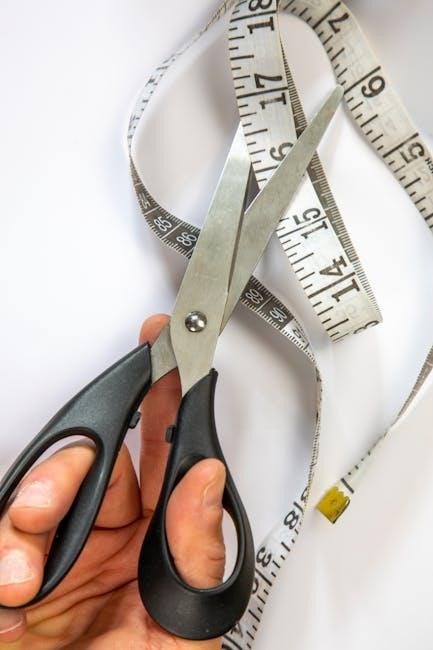
Precise body measurements are the cornerstone of successful garment fitting. This lesson will cover how to accurately measure bust, waist, hips, and other key areas using a flexible measuring tape. Students will learn proper posture and tape placement to avoid common errors like holding the tape too tightly or loosely.
We’ll discuss understanding ease – the difference between body measurements and pattern measurements – and how it affects fit. Students will practice taking measurements on each other, receiving feedback and refining their technique. Accurate measurements ensure the chosen pattern size corresponds to their body, leading to well-fitting clothes.
C. Choosing the Correct Pattern Size
Selecting the right pattern size is crucial, often differing from ready-to-wear clothing sizes. This lesson builds upon accurate measurements, guiding students to compare their body measurements to the pattern’s size chart. We’ll emphasize that pattern sizes are not standardized and vary between companies.

Students will learn to identify their dominant measurement – the one that dictates the pattern size – and how to blend between sizes if necessary. Understanding the concept of “ease” and how it impacts fit will be reinforced. We’ll discuss recognizing pattern adjustments needed for a personalized fit, avoiding frustration and ensuring a successful sewing experience.
VII. Intermediate Sewing Techniques (Lessons 13-14)
These lessons transition students beyond basic construction, introducing more complex techniques. We begin with darts – essential for shaping garments and achieving a flattering fit. Students will practice marking, cutting, and sewing various dart types, understanding their impact on fabric manipulation.
Next, we tackle basic zipper insertion, covering centered, lapped, and invisible zipper applications. Emphasis will be placed on precise stitching and achieving a professional finish. Students will learn to overcome common zipper-related challenges, building confidence in handling this frequently encountered sewing element.
Darts are fundamental shaping elements in garment construction, allowing fabric to conform to the body’s curves. This lesson demystifies dart creation, starting with understanding their purpose and how they influence fit. Students will learn to accurately mark dart locations based on pattern markings, utilizing appropriate tools for precision.
We’ll cover cutting techniques for various dart shapes – straight, curved, and pointed – and practice sewing them with neat, tapered stitching. Emphasis will be placed on proper pressing techniques to ensure darts lie flat and contribute to a professional finish. Students will analyze how dart placement alters garment silhouette.
B. Basic Zipper Insertion
This lesson introduces the essential skill of inserting a basic zipper, a cornerstone of many sewing projects. We’ll begin with zipper selection – understanding different types and their appropriate applications. Students will learn to prepare fabric for zipper insertion, including interfacing for stability and accurate marking of zipper placement.
The focus will be on centered zippers, practicing techniques for precise stitching and creating a clean finish. We’ll cover methods for concealing zipper teeth and achieving a smooth, professional look. Troubleshooting common zipper insertion issues, like puckering or uneven stitching, will also be addressed, building confidence.
VIII. Course Wrap-up & Resources (Lesson 15)
This final lesson consolidates all learned skills, offering a comprehensive review of techniques from machine basics to zipper insertion. Students will participate in a Q&A session, addressing any lingering questions and reinforcing understanding. We’ll discuss common sewing challenges and strategies for overcoming them independently.
A curated list of resources for continued learning will be provided, including recommended books, websites (like PatternReview.com), and fabric stores. Emphasis will be placed on printable worksheets and step-by-step exercises for ongoing practice. Students are encouraged to explore intermediate techniques and embark on more complex projects, fostering a lifelong passion for sewing.
A. Review of Key Skills
This session provides a focused recap of essential techniques mastered throughout the 15-lesson course. We’ll revisit threading the machine, winding a bobbin, and practicing the straight stitch – foundational elements for all sewing projects. Emphasis will be placed on recognizing and troubleshooting common sewing machine issues, empowering students to resolve problems independently.
Hand sewing stitches like running and back stitch will be reviewed, alongside seam finishes such as zigzag and pinked edges; We’ll also revisit fabric fundamentals, including woven versus knit fabrics and understanding grainlines. This comprehensive review ensures students confidently apply these skills to future endeavors, building a strong sewing foundation.
B. Resources for Continued Learning
To foster ongoing skill development, students will receive a curated list of valuable resources. This includes recommended websites offering free tutorials, pattern databases, and sewing blogs. We’ll highlight Dru Christine Fabrics and PatternReview.com, platforms known for comprehensive sewing information and community support.
Information on local fabric stores and sewing machine repair services will also be provided. Students are encouraged to explore advanced classes and workshops to further refine their techniques. The goal is to empower learners to continue their sewing journey independently, accessing a wealth of knowledge and inspiration beyond the course completion.
C. Q&A Session
The final lesson culminates in an open Q&A session, providing a dedicated space for students to address any lingering questions or uncertainties. This interactive forum allows for personalized clarification on techniques covered throughout the 15-lesson curriculum.
We’ll revisit common troubleshooting issues with sewing machines and discuss individual project challenges. Students are encouraged to bring examples of their work for constructive feedback. This session aims to solidify understanding and build confidence, ensuring learners feel prepared to tackle future sewing endeavors independently, utilizing resources provided and their newly acquired skills.